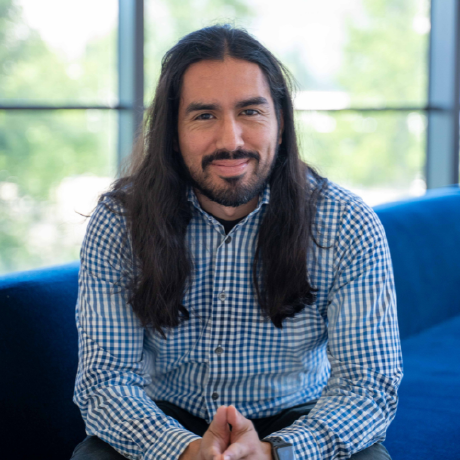
Ph.D. in the Biology of Aging with expertise in how biological systems respond to stress, from activated muscle stem cells to irradiated mammalian tissues and aging animal models. My dissertation showed how neuropeptide signaling and autophagy regulate stress resilience and lifespan in C. elegans. I pair this mechanistic depth with strong experimental and computational skills, and I now also stress-test frontier AI models on biological reasoning, designing RL task environments and building public evaluations. Seeking biotech and applied AI roles where this combination can drive translational impact.

Builds training data and environments for frontier AI labs (YC-backed)
- Design and record expert bioinformatics and image analysis workflows on biological datasets.
- Develop reinforcement learning (RL) task environments and grading rubrics for evaluating LLM agents on scientific image analysis workflows (Fiji/ImageJ).
- Review agent performance, diagnose failure modes, and refine task design in working sessions with the client research team.
- Review and refine RL tasks authored by other biology Ph.D. experts, standardizing rubric quality and rigor across contributors.

- Review RL rollout trajectories for leading frontier AI labs, comparing highest- and lowest-scoring model attempts across dozens of chain-of-thought steps in constrained, no-internet Python environments, on tasks spanning protein variant-effect prediction, bioinformatics, image analysis, and meta-analysis generation.
- Assess task design, rubric quality, realism, and difficulty, distinguishing genuine scientific difficulty from difficulty artificially introduced by task or environment constraints.
- Design adversarial RL tasks for agents using specialized biology software, authoring prompts, rubrics, and golden trajectories with enough complexity that current frontier models still fail.
 Buck Institute for Research on Aging & USC, Garrison Lab
Buck Institute: world's first independent research institute devoted exclusively to aging biology
USC: world's oldest & largest school of gerontology, home to the first Ph.D. in Gerontology
Dissertation: "Cell Non-Autonomous Regulation of Aging and Stress Responses in C. elegans"
- Discovered a novel role for neuropeptide signaling in regulating autophagy and stress resilience in C. elegans, forming the basis of a forthcoming first-author manuscript with therapeutic relevance.
- Co–first authored a study (PMCID: PMC9764823) establishing reciprocal hemizygosity sequencing (RH-seq) as a tool in C. elegans to dissect genetic variation in stress responses, identifying cutl-24 as required for maternal ER-stress resistance.
- Established lifespan, thermotolerance, and RNAi workflows using novel C. elegans strains.
- Demonstrated tissue-specific, age-dependent regulation of autophagy and HSF-1 activation using fluorescent reporter strains, super-resolution confocal microscopy (Zeiss LSM980 Airyscan), and image-analysis pipelines (Imaris, Fiji/ImageJ, CellProfiler).
- Linked neuronal signaling, proteostasis, and autophagy using systems-level approaches to explain mechanisms underlying organismal longevity.
- Integrated molecular genetics, quantitative imaging, and RNA-seq to characterize transcriptional and physiological responses to hormetic stress across tissues.
- Identified stress-response pathway nodes as potential intervention points for improving cellular and tissue resilience.
- Served as Vice President, then President, of the Multicultural Trainee Association (MTA), leading a five-member team that ran institute-wide professional development workshops, guest speakers, cultural celebrations, and a STEM outreach volunteer program for underrepresented Bay Area schools.
- Trained and supervised junior researchers in experimental methods, data analysis, and figure preparation.
- Presented findings in seminars and poster sessions for interdisciplinary audiences at USC and the Buck Institute.
 UCSF, Broad Center of Regeneration Medicine, Brack Lab
One of the world's leading stem cell and regenerative medicine centers
- Isolated and characterized satellite cells from murine skeletal muscle to study age-associated changes in stem cell function.
- Performed cryosectioning, immunostaining, and flow cytometry to evaluate lineage composition and regenerative potential.
- Collaborated with postdoctoral researchers to design experiments probing molecular mechanisms of stem cell aging.
 Varian Medical Systems (now Siemens Healthineers)
- Designed and executed pre-clinical assays quantifying DNA damage, repair, cytotoxicity/viability, and senescence following X-ray or proton irradiation.
- Quantified DNA double-strand break formation and repair (γH2AX/53BP1 foci) using automated slide staining and high-content imaging platforms.
- Isolated and processed peripheral blood mononuclear cells (PBMCs) from human samples for downstream functional assays.
- Authored and version-tracked lab-wide SOPs for experimental protocols and equipment.
- Collaborated with physicists and engineers to integrate biological data with imaging and dosimetry; contributed to a 2019 American Association for Cancer Research (AACR) abstract.
Rodriguez A.T. et al. "Neuropeptide Regulation of the Heat Shock Response." Manuscript in preparation.
Wang W., Flury A.G., Rodriguez A.T. (co-first authors), Garrison J.L., Brem R.B. "A role for worm cutl-24 in background- and parent-of-origin-dependent ER stress resistance." BMC Genomics 23, 842 (2022). PMCID: PMC9764823.
Aging Biology Evals · lifespan.andrewtrodriguez.com
Tested Claude Sonnet 4.6 on 1,379 GenAge genes and found a systematic directional bias: the model identifies pro-longevity genes 73% of the time but anti-longevity genes only 30%, and in many cases its own reasoning names a gene’s anti-longevity role correctly while the final structured label inverts it.
For each gene, the model sees the organism, gene symbol, protein function, and GO Molecular Function terms (with lifespan and aging language stripped) and predicts pro-longevity, anti-longevity, or unclear; each gene is also run with the symbol blinded as a contamination control. A second Claude call grades the first, validated against expert hand-grading (Cohen’s κ = 0.79). Built with Claude Code on TypeScript, Next.js, Neon Postgres, and the Anthropic SDK; deployed on Vercel.